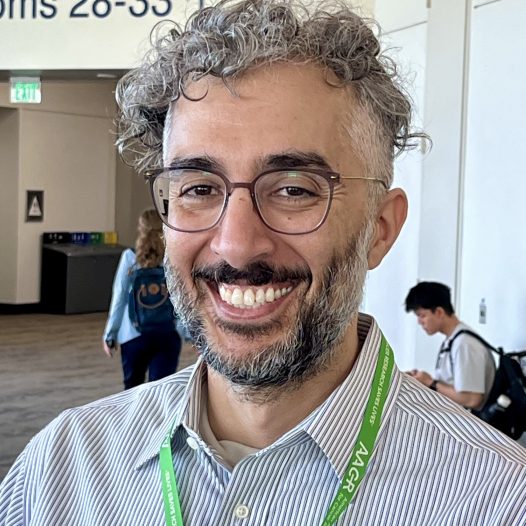


Oral Intralesional PD 1 Blockade Promises Less Risk of Progression to Oral Cancer than Surgery, with Preserved Quality of Life
An interview with:
Moran Amit MD PhD, Head and Neck Surgeon, Assistant Professor, University of Texas MD Anderson Cancer Center, Houston, Texas USA.
SAN DIEGO, USA—The risk that oral pre-cancerous lesions will progress to cancer may effectively be reduced by using intralesional injections of a checkpoint inhibitor, sparing the need for multiple surgical resections and the loss of oral function such surgery can bring.
This hope was held out at the AACR 2026 Annual Meeting in San Diego by Moran Amit MD PhD, who is a head and neck surgeon and assistant professor, at the University of Texas MD Anderson Cancer Center in Houston, Texas. After reporting his new data to the conference he talked with our reporter, Peter Goodwin:
IN: [GOODWIN] “I am at the American Association ….
OUT: ……..the Audio Journal of Oncology, I’m Peter Goodwin 10:13 secs
AACR 2006 ABSTRACT: CT188
Title:
Intralesional PD1 blockade for Oral Cancer Prevention: First in Class Phase1 Trial
Authors:
Moran Amit, Robert Saddawi-Konefka, Shorook Naara, Fred Netto, Fred Netto, Chen F Fushun, Yen Vu, Sophie Li, Tongxin Xie, Shamima Akhter, Hinduja Sathishkumar, Tieling Zhou, Sreyashi Basu, Luana Sousa, Neal Akhave, Theresa Hofstede, Ann Gillenwater, Ed Diaz, Kirsten Pytynia, Lorena Gomez, Michelle Williams, Andrew Sikora, Jeffrey Myers, Humam Kadara, James Allison, Sharma Padmaneee, Mark Chambers
UT MD Anderson Cancer Center, Houston, TX
Background:
Oral premalignant lesions affect 5% of the global population with transformation rates of 1-8% in mild-moderate dysplasia and up to 36% in severe dysplasia. Current management via surgical excision yields 30-40% recurrence despite negative margins, with cumulative functional morbidity. While systemic PD-1 blockade demonstrated biological activity in oral dysplasia, immune-related toxicity precludes use in non-cancer populations. We hypothesized intralesional delivery would achieve immune remodeling while eliminating systemic exposure. We conducted a phase 1, open-label, dose- escalation trial of intralesional nivolumab in patients with histologically confirmed oral epithelial dysplasia (NCT05327270). Twenty-nine patients received 10 mg or 20 mg intralesional nivolumab every three weeks for four cycles. Primary endpoints were safety and tolerability; secondary endpoints included lesion response, progression to carcinoma, pharmacokinetics, spatial immune profiling, and, uniquely for this population, prospective patient-reported outcomes (PROs). No dose-limiting toxicities occurred; 94% of adverse events were grade 1-2 with no systemic immune-related toxicities. Plasma nivolumab concentrations remained 10-fold below IV dosing without accumulation. Lesion area decreased 60% across cohorts with 41% histologic downgrading. Twelve-month cancer- free survival was 75.8%; all progression events were detected early and surgically salvageable. We performed the first prospective longitudinal analysis of PROs in oral premalignancy. High study completion (86%) and adherence, despite significant travel burden, coupled with stable or improved quality-of-life scores (specifically pain and swallowing), indicate that repeated intralesional injections are a feasible, non-toxic approach associated with no functional adversity. Unlike surgical standards that degrade function, this strategy preserved patient quality-of-life. Mechanistic analyses using spatial transcriptomics (Xenium) and multiplexed imaging (CODEX) revealed immune activation exclusively in treated lesions: increased CD4+ and CD8+ T cell infiltration, enriched CCR7+ activated dendritic cells, elevated CD103+ tissue-resident CD8+ T cells, and formation of higher-order immune assemblies. Untreated non-index lesions from the same patients showed no immune changes, definitively demonstrating anatomically restricted immune activation. PBMC profiling confirmed absence of systemic immune perturbation.
This first-in-class trial demonstrates intralesional PD-1 blockade safely reprograms premalignant tissue immunity without systemic perturbation, establishing lesion-directed checkpoint inhibition as a viable cancer interception strategy. These findings have established the foundation for a randomized, placebo-controlled Phase 2 trial currently enrolling at MD Anderson Cancer Center (NCT06561087) and support broader applicability to accessible epithelial precancers including cervical, anal, and cutaneous dysplasia.
PRESS RELEASE:
Intralesional Nivolumab May Be Effective Against Precancerous Oral Lesions
The treatment preserved quality of life
SAN DIEGO – Injecting nivolumab (Opdivo) directly into precancerous oral lesions led to reduction in lesion size and allowed some patients to avoid surgery, according to research from a phase I clinical trial presented at the American Association for Cancer Research (AACR) Annual Meeting 2026, held April 17- 22.
Approximately 5% of the general population have precancerous lesions in their mouth that can carry a 1% to 36% risk of progression to oral cancer, depending on the extent of dysplasia (i.e., how abnormal the cells of the lesion are) and other factors, explained presenter Moran Amit, MD, PhD, a surgeon and assistant professor at The University of Texas MD Anderson Cancer Center. Since there are no reliable biomarkers to predict the risk of progression, many patients typically undergo surgical resection of their lesions, but this procedure is associated with high morbidity, he said.
“The mouth is the main conduit to so many different functions, including speaking, eating, drinking, and breathing. Think about the last time you had a sore spot in your mouth, how debilitating that was. Now imagine a patient who has to undergo surgery at many locations in their mouth, over and over again as the lesions recur,” said Amit, noting that about 60% of patients present with multiple lesions and that the risk of recurrence after surgery can be as high as 40%.
“Each time a patient has to undergo surgery, they are losing volume of their oral cavity, most commonly on the tongue. Once you lose a certain amount of your tongue, you cannot articulate anymore, you cannot swallow effectively,” he added. “Because of precancerous lesions, patients can lose their ability to speak and eat. The objective of our study was to find a way to spare patients from this oftentimes debilitating surgery.”
Prior research has indicated that treatment with the immune checkpoint inhibitor nivolumab could reduce the size and progression risk of precancerous oral lesions, but this treatment, which is delivered systemically through intravenous infusion, comes with severe toxicities, said Amit.
“While effective, systemic nivolumab can lead to toxicities that would not be acceptable for patients who do not even have cancer yet,” he noted.
Amit and colleagues reasoned that injecting a lower dose (2% to 4% of the intravenous dose) of nivolumab directly into the oral lesion could effectively treat the lesion without inducing the systemic toxicities associated with intravenous nivolumab.
To test this hypothesis, they conducted a phase I clinical trial to evaluate the safety and efficacy of intralesional nivolumab.
The trial enrolled 29 patients with at least one histologically confirmed, untreated premalignant oral lesion that had a high risk of progression to oral cancer due to its size, location, morphology, or extent of dysplasia, or the patient’s age or medical history. More than half of the lesions were located on the tongue. Fifteen patients had lesions with high-grade (moderate or severe) dysplasia; the remaining 14 patients had low-grade (mild) dysplasia.
Patients received either 10 mg or 20 mg of nivolumab injected directly into one of their oral lesions every three weeks for a total of four cycles. The trial protocol allowed treatment of only one lesion per patient in order to assess whether intralesional nivolumab’s effects would be systemic or restricted to the site of injection. In instances where patients had more than one lesion, the largest lesion was chosen for treatment.
After a median follow-up of 14.5 months after the first injection, 25 of 29 patients (85%) had experienced a clinical response, defined as a decrease in lesion size. Lesion area decreased by an average of 60%, and 19 patients experienced reductions greater than 50%. Clinical responses were observed for lesions that were high-grade and those that were low-grade at baseline. Twelve patients (41%) experienced histologic downgrading of their treated lesion, and six patients had complete pathologic response, meaning their treated lesion had no signs of dysplasia at the time of follow-up. Of the six patients with complete pathologic response, four had moderate dysplasia before treatment, and two had mild dysplasia.
Twelve months after treatment, 82.13% of treated lesions continued to be cancer free. For the six patients whose treated lesions progressed to cancer, the progressions were detected early, and the lesions were surgically removed. None of the patients whose lesions didn’t progress required or opted for surgical resection of their treated lesions during the follow-up time.
Serum levels of nivolumab were consistently 10-fold lower than typically observed with systemic administration. No dose-limiting toxicities occurred with intralesional treatment. The most common adverse events were fatigue, diarrhea, and rash. Mild injection-site reactions occurred in 40% of injections but resolved within 48 hours without intervention. Most adverse events were grade 1 or 2, but there was one case each of grade 3 diarrhea, grade 3 hyperglycemia, and grade 4 acidosis.
All but four enrolled patients completed all treatment cycles and monitoring. Patients’ symptoms, such as those related to swallowing, mouth and throat soreness, voice, communication, taste, and nutrition, either improved or remained stable during treatment and follow-up, according to patient-reported outcomes. Patients reported greater enjoyment of life and increased physical activity after treatment as compared with baseline.
The researchers also examined tissue samples from 23 patients to determine how intralesional nivolumab impacted the immune microenvironment of treated and untreated lesions. They observed immune activation exclusively in the treated lesions, as indicated by greater infiltration of CD4+ T cells, CD8+ T cells, and activated dendritic cells, as well as immune-cell interactions indicative of adaptive immune responses. Untreated lesions from the same patients did not exhibit immune changes, which, according to Amit, suggests that intralesional delivery effectively limited nivolumab’s function to target sites.
“Our findings demonstrate that intralesional delivery of nivolumab is safe, well tolerated, and results in efficacy rates unparalleled by other nonsurgical methods, which allowed us to spare surgery for the majority of patients—spare removal of pieces of their mouth, whether it’s the tongue, the cheek, the floor of their mouth, or their palate,” said Amit. “Even if a patient ends up undergoing surgery later, the average 60% reduction in lesion size from intralesional nivolumab means we can substantially minimize the amount of surgery they’ll need down the road, which would hopefully translate to a much lower impact on their quality of life.”
Amit noted that the findings may have implications beyond oral lesions. “Many cancer types are preceded by precursor lesions, such as those arising on the skin, cervix, or colon. Our results raise the possibility that local immunotherapy administration could be an effective interception strategy for those precancerous lesions as well.”
Limitations of the study include the single-arm design, short follow-up time, and the fact that the study was not statistically powered to assess efficacy.
The study was supported by the Cancer Prevention and Research Institute of Texas. Amit declares no conflicts of interest.
Moran Amit MD PhD AACR 2026 Audio Journal of Oncology TEXT April 27, 2026