

Immune Checkpoint Inhibitor-Induced Myocarditis within One Month Predicts Lethal “Triple M Overlap Syndrome”
An interview with:
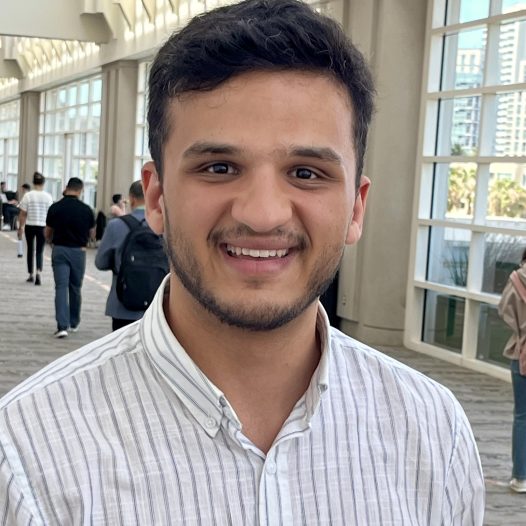
Hassan Mohammed Abushukair MD, Post-Doctoral Researcher, Oklahoma University Stephenson Cancer Center, Oklahoma City
SAN DIEGO, USA—A frequently fatal side effect of immune checkpoint inhibition known as the “Triple M Overlap Syndrome” can be predicted if myocarditis is noted in the first month of immunotherapy. That’s according to researchers who reported study findings at the 2026 Annual Meeting of the American Association for Cancer Research.
First author Hassan Abushukair MD, a Post-Doctoral Researcher at Oklahoma University Stephenson Cancer Center in Oklahoma City gave the details to Peter Goodwin.
AUDIO JOURNAL OF ONCOLOGY; Hassan Mohammed Abushukair MD
IN: [GOODWIN]”We are at……..
OUT: ……I’m Peter Goodwin” 10:44secs
STUDY CONCLUSION:
“This is the largest global dataset to characterize TMOS and MC fatality. Our data shows that TMOS represents a uniquely fatal phenotype of ICI-MC with a higher tendency in cancers with wider ICI use. Regarding MC fatality, we show MC timing to be a critical determinant of fatality, specifically within the first month of ICI start, demonstrating the need for refined screening and monitoring strategies within this time window”
AACR 2026 Abstract 5212
Title:
Clinical characterization of immune checkpoint inhibitor-induced myocarditis and the triple M overlap syndrome
Authors:
Hassan Mohammed Abushukair1, Eman Alghamdi2, Woncheol Jung1, Mehak Laharwal3, Hafsa Gundroo4, Sagal Pannu5, Aik Choon Tan6, Pauline Funchain7, NohaAbdel-Wahab8, Elad Sharon9, Douglas B. Johnson10, Amin H. Nassar11, Fawaz Al-Harbi2, Tae Gyu Oh1, Abdul Rafeh Naqash5
1Oncology Science, University of Oklahoma Stephenson Cancer Center, Oklahoma City, OK,
2Saudi Food and Drug Authority, Riyadh, Saudi Arabia,
3Allegheny Health Network Cancer Institute, Pittsburgh, PA,
4Morehouse School of Medicine, Atlanta, GA,
5University of Oklahoma Stephenson Cancer Center, Oklahoma City, OK,
6Huntsman Cancer Institute at the University of Utah, Salt Lake City, UT,
7Stanford Cancer Institute, Pao Alto, CA,
8The University of Texas MD Anderson Cancer Center, Houston, TX,
9Dana-Farber Cancer Institute, Boston, MA,
10Vanderbilt Ingram Cancer Center, Nashville, TN,
11Yale University, New Haven, CT
Background:
Immune checkpoint inhibitor (ICI)-induced myocarditis (MC) is one of the most fatal immune-related adverse events (irAEs) in cancer patients, often overlapping with myositis (MS) and myasthenia gravis (MG), forming the fulminant triad of Triple M Overlap Syndrome (TMOS). In this study, we report the largest clinical series of this rare fatal syndrome, aimed at delineating clinical features, fatality predictors, and temporal trends.
Methods:
We surveyed the WHO Vigibase pharmacovigilance database for cases of ICI- MC, MS, and MG in cancer cases through January 1, 2025. Seven groups emerged: MC alone, MS alone, MG alone, MC+MS, MC+MG, MS+MG, and TMOS. A machine learning (ML) model using the XGBoost algorithm was constructed using a subset (n = 858) of ICI- MC with complete data availability (age, sex, co-reactions, cancer/ICI type, and MC timing) for MC fatality prediction with an 80/20% data split for training and internal testing. An external public real-world dataset (n = 28) of ICI-MC was used for independent validation of our fatality ML prediction model.
Results:
Among a total of 4,950 ICI-MC/MS/MG cases, we identified 2,641 ICI-MC cases, of which 1,911 (72.4%) were MC alone and 730 (27.6%) were overlapping with MS and/or MG (MC+MS = 364, 13.8%; MC+MG = 159, 6%; TMOS = 207, 7.8%). TMOS occurred predominantly in melanoma (35.8%) and was more likely in males (64.7% vs 52.9%, p- value = 0.0049) treated with ICI dual therapy (25.1% vs 20.4%, p-value = 0.0030) compared with MC alone. Hepatitis was the most common irAE co-occurring in cases with TMOS (n = 30, 14.5%). MC-specific fatality rates were higher in TMOS (38%) compared to MC alone (21.2%), MC+MS (22.5%), or MC+MG (25.7%). MC alone had a later onset from ICI start than MC+MS, MC+MG, and TMOS (median time-to-MC: 60.8, 27, 27, and 26 days, respectively; p < 0.05). Early-onset MC within the first month of ICI initiation was independently associated with increased MC fatality after adjustment for age, ICI regimens, cancer type, and co-reactions (≤1 vs 1-3 months – OR: 0.41, 95% CI [0.22- 0.73], p-value = 0.0036; ≤1 vs 3-12 months – OR: 0.44, 95% CI [0.21-0.86], p-value = 0.0212). Our final MC fatality classifier achieved an AUC of 0.79, 0.75, and 0.85 with the training (n = 686), internal testing (n = 172), and external independent validation (n = 28) datasets, respectively, with the top predictive features for MC fatality being early-onset MC occurrence (within the first month of ICI start) and cardiorespiratory co-reactions.
Conclusion:
This is the largest global dataset to characterize TMOS and MC fatality. Our data shows that TMOS represents a uniquely fatal phenotype of ICI-MC with a higher tendency in cancers with wider ICI use. Regarding MC fatality, we show MC timing to be a critical determinant of fatality, specifically within the first month of ICI start, demonstrating the need for refined screening and monitoring strategies within this time window.
PRESS RELEASE:
Early Myocarditis Onset After Immunotherapy May Predict Treatment- related Fatality
Co-occurrence of myocarditis with myositis and myasthenia gravis may also increase risk of death
SAN DIEGO – Patients who developed myocarditis within the first month of receiving immune checkpoint inhibitor therapy were more likely to die of myocarditis, and myocarditis-specific fatality was more common in patients who experienced co-occurring myositis and myasthenia gravis, according to results from a study presented at the American Association for Cancer Research (AACR) Annual Meeting 2026, held April 17-22.
Immune checkpoint inhibitors (ICIs) have ushered in a new era of cancer immunotherapies, but on rare occasions, they can cause myocarditis, which can prove more immediately deadly than the cancers the drugs are meant to treat in some cases, explained Hassan M. Abushukair, MD, a postdoctoral researcher at the Oklahoma University Stephenson Cancer Center, who presented the study.
When ICIs cause myocarditis, he added, they can often also cause myositis (autoimmune muscle inflammation) and myasthenia gravis (nerve-muscle communication disruption), which come together to form what researchers term “triple-M overlap syndrome,” or TMOS.
“TMOS and the conditions that compose it can easily cause fatalities for the subset of ICI-treated patients who develop these side effects. But clinicians need to know who may be at the greatest risk for fatal outcomes, and we do not yet have that level of understanding,” said Abushukair. “Our analysis aimed to identify how we can more systematically approach risk stratification for patients who may develop fatal cardiac and autoimmune side effects from ICI treatment.”
Abushukair and colleagues identified ICI-induced myocarditis, myositis, and myasthenia gravis in cancer cases within the World Health Organization (WHO) VigiBase pharmacovigilance databases. From this dataset, they formed seven groups of ICI side effects of concern: myocarditis alone; myositis alone; myasthenia gravis alone; myocarditis and myositis; myocarditis and myasthenia gravis; myositis and myasthenia gravis; and TMOS.
Out of 4,950 cases of myocarditis, myositis, and myasthenia gravis identified within the dataset, the researchers identified 2,641 ICI-induced myocarditis cases. Of those instances of myocarditis, 1,911 (72%) were myocarditis alone, and 730 (27.6%) overlapped with myocarditis and/or myasthenia gravis. The most common overlap combination was myocarditis and myositis (364 cases), followed by TMOS (207 cases). An overlap of myocarditis and myasthenia gravis was the least common combination, with 159 cases.
Following the start of ICI therapy, myocarditis had a significantly later median date of onset (60.8 days) than myocarditis and myositis (27 days); myocarditis and myasthenia gravis (27 days); and TMOS (26 days).
After adjusting for age, ICI regimens, cancer type, and co-reactions, the researchers found that myocarditis occurring during the first month of ICI therapy start was associated with a significantly increased likelihood of myocarditis-specific fatality. Patients with ICI-induced myocarditis that began less than a month after starting treatment were 59% more likely to die from myocarditis than those whose myocarditis began one to three months after starting treatment; they were also 56% more likely to die from myocarditis than those whose ICI-induced myocarditis occurred three to 12 months after starting treatment.
Myocarditis-specific fatality was highest in patients with TMOS (38%). Deaths attributable to myocarditis were less frequent in patients with myocarditis alone (21.2%); myocarditis and myositis (22.5%); and myocarditis and myasthenia gravis (25.7%).
The team is also developing an algorithm to predict fatality from ICI-induced myocarditis by using machine learning based on 858 cases of ICI-induced myocarditis with complete data availability. The researchers’ tool achieved considerable accuracy in classifying fatal and nonfatal cases.
“Our analysis indicates that the first month of a patient receiving ICI therapy is the crucial period for determining patients’ risk of myocarditis fatality. If a patent on ICIs develops myocarditis in those first 30 days, that’s a flashing warning light,” said Abushukair. “This gives clinicians an actionable timeframe for determining whom ICI therapy may be dangerous for.”
Abushukair also spoke to the potential of his team’s algorithmic model, which he hopes, following additional training data and validation currently ongoing, might have use on the clinical side for patient monitoring and risk stratification for patients receiving ICI therapy.
“I believe the model we’re developing is a great illustration of how even simple clinical data analysis can be used to address fatality in cancer treatment. Ultimately, we envision a helpful bedside tool to rule out high-risk fatality from TMOS and its constituent conditions,” he said. “With a greater understanding of the risks that these ICI side effects pose, clinicians and patients alike can be more attuned to which symptoms to be on the lookout for. Our hope is that this will create a safer paradigm for ICI treatment.”
Limitations of this study include its retrospective, descriptive design and the use of a global dataset that contained considerable heterogeneity for various protocols, thresholds, etc. The WHO dataset also lacked complete treatment information.
Abushukair reports no funding sources for the study and discloses no conflicts of interest.
Hassan Mohammed Abushukair MD Audio J Oncology June 4, 2026